Dead Cells
Motion Twin · Bordeaux
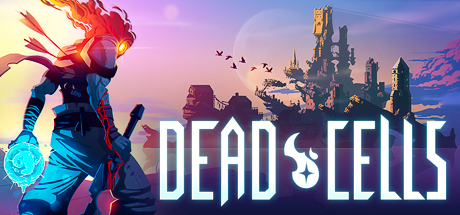
A Bordeaux worker cooperative, first console/PC title after fifteen years of web games. Fifteen months of transparent Early Access turned into an audience-building machine — the 1.0 wasn't a launch, it was a transition.
Early Access as an audience workshop
Motion Twin is a worker cooperative based in Bordeaux, founded in 2001 on web games (Hammerfest, Dinoparc). Dead Cells is their first console/PC title — every employee is a partner, every decision is made collectively, no investor to serve. This structure isn't incidental: it let them make a counter-intuitive decision in May 2017 — release the game in Early Access for fifteen months, when at eight people the rational reflex would have been to wrap up fast.
Early Access wasn't run as a sales channel — it was run as an audience-building workshop. Frequent updates documented in public devlogs, a visible roadmap, community feedback built into the design. Sebastien Benard, co-creator, documented the method at GDC 2019 ('Dead Cells: What the F*n!?'): systematic tracking of player frustration points, even the smallest — a missed jump, visual feedback that wasn't sharp enough, an unreadable attack animation. Each iteration reduced friction.
The result when EA ended in August 2018: 850,000 copies already sold, and — this is the key point — a hardcore base that had been generating constant word of mouth for fifteen months. The 1.0 release wasn't a launch in the classic sense. No massive press campaign, no creator blitz. The Steam signal had been maintained continuously since 2017 by regular updates and new players converted every week. Ten months after 1.0, the counter passed 2 million.
The common misreading is 'Early Access = paid beta'. Motion Twin used it as audience infrastructure: the community grows while you build, feedback improves the game, creator videos post continuously for fifteen months instead of concentrating on a 48-hour window. At 1.0, the Steam algorithm pushes a title it already knows as 'active and moving' — the promotion doesn't even need triggering. The cooperative structure made that long timeframe bearable. The method is repeatable, the structure not necessarily.